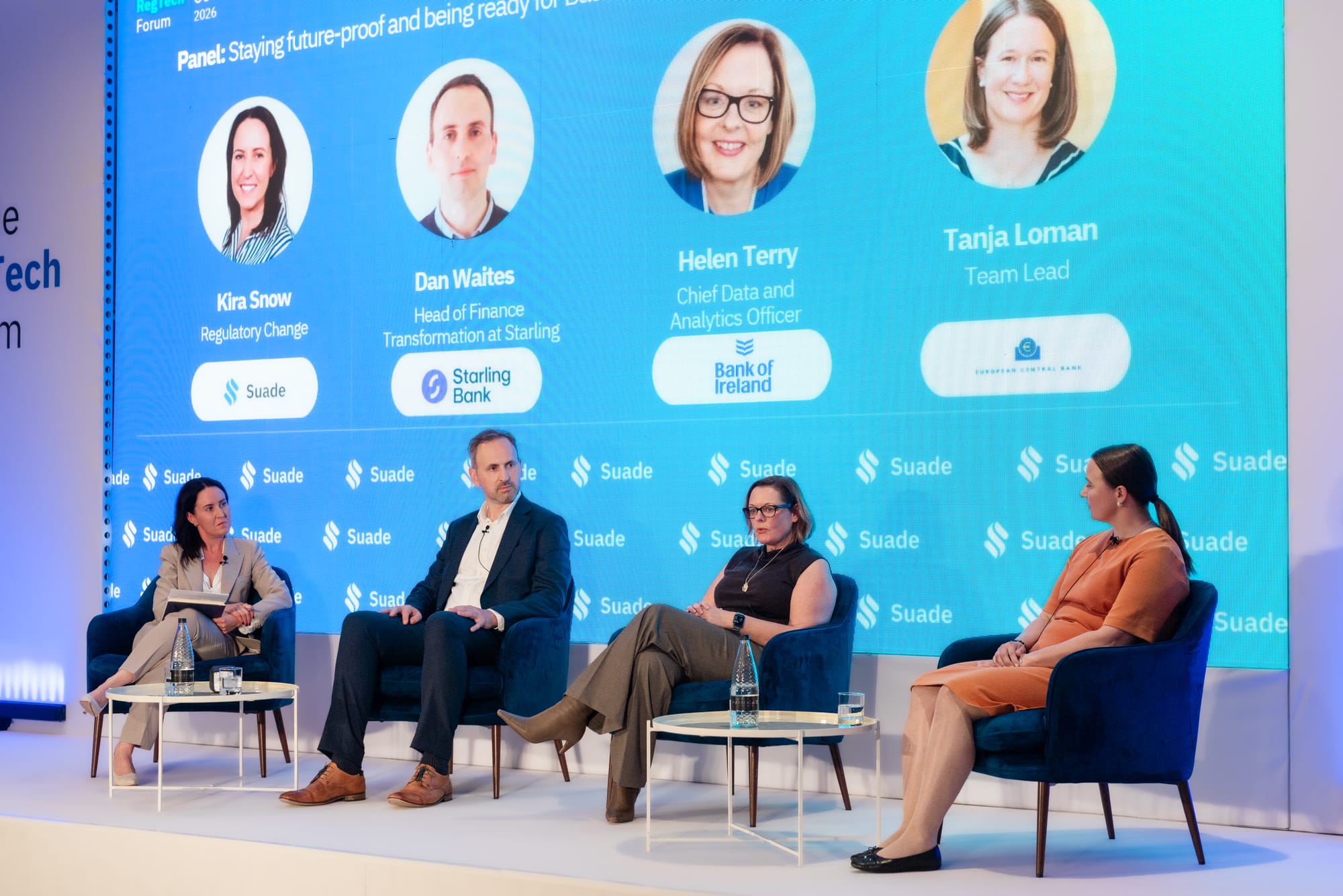
RegTech Forum 2026 - Panel: Staying future-proof - Basel 3.1, FRTB, IReF and future regulatory change
As regulatory requirements continue to evolve, financial institutions must prepare for more than the next implementation deadline. Basel 3.1, the Fundamental Review of the Trading Book (FRTB) and the Integrated Reporting Framework (IReF) reflect the ongoing need for firms to adapt their data, systems and reporting processes. The Staying Future-Proof – Basel 3.1, FRTB, IReF and Future Regulatory Change panel explored how organisations can manage these demands while building capabilities that make future regulatory change easier to implement.
Regulatory change should be a long-term strategic priority. Rather than treating each new requirement as an isolated project, firms have an opportunity to strengthen their data foundations, improve processes and develop reusable capabilities. Each implementation should leave the organisation better prepared for the next change, rather than adding another layer of complexity.
Granular, high-quality data is essential for future readiness. As reporting requirements become more detailed, firms need reliable, well-classified data that can support new calculations and disclosures without repeatedly rebuilding their systems. Standardised data models, reusable capabilities and a clear separation between core data and reporting-specific calculations can make implementation more efficient and adaptable.
Data governance must be an ongoing discipline. Maintaining data quality, lineage, controls and clear ownership requires continuous attention. Effective governance cannot sit solely with technology or data teams; it depends on shared accountability across business, data and technology functions, supported by an organisation-wide culture that recognises the importance of reliable data.
Breaking down data silos creates opportunities for greater consistency and reuse. Combining accounting, statistical and other datasets where appropriate can help firms reduce duplication and respond more effectively to different regulatory requirements. Initiatives such as IReF and the development of common data dictionaries offer opportunities to support greater harmonisation, although differences in national requirements and regulatory objectives must still be considered.
Continuous improvement and automation can make reporting more resilient. Automated testing, frequent releases and more regular reporting runs can help firms identify issues earlier, reduce month-end surprises and improve the reliability of regulatory processes. Even when immediate deadlines require a focused delivery, organisations should look for opportunities to strengthen their wider data environment and create capabilities that can be reused.
Simplification and collaboration remain important to effective regulatory change. Reducing duplicated returns, unnecessary detail and unclear instructions can deliver practical benefits in the near term, while longer-term investment supports more integrated, data-led reporting. Early engagement with regulators, practical industry feedback and shared technical work can help ensure requirements are clearly defined, implementable and aligned with genuine regulatory needs.
AI can accelerate implementation, but human accountability remains essential. AI offers opportunities to support regulatory interpretation, code development, data lineage analysis and anomaly detection. However, firms must retain responsibility for interpreting requirements, validating outputs and maintaining effective controls. As regulatory processes become more automated, teams will also need broader skills spanning AI, data, regulatory expertise and commercial understanding.
Ultimately, future-proofing means building the foundations to adapt continuously, rather than simply meeting the next deadline. By investing in reusable data capabilities, embedding effective governance and adopting a culture of continuous improvement, financial institutions can make regulatory change more manageable and sustainable. The goal is to create flexible, reliable reporting infrastructure that meets today's obligations while preparing the organisation for requirements that have yet to emerge.
Panellists:
- Kira Snow, Regulatory Change, Suade (Moderator)
- Dan Waites, Head of Finance Transformation, Starling
- Helen Terry, Chief Data and Analytics Officer, Bank of Ireland
- Tanja Loman, Team Lead, European Central Bank
This summary captures key themes from the discussion. Individual contributions have not been attributed to participants, in accordance with the Chatham House Rule.